
For more than two decades, searching the web meant typing a few keywords, scanning a page of blue links, and opening several tabs to piece together an answer. AI-powered search engines are changing that. Instead of handing you a list of pages, they read the sources for you and write an answer. Here is what they are, how they work, and what they mean for everyone who uses or publishes on the web.
What Is an AI-Powered Search Engine?
An AI-powered search engine uses large language models (LLMs) alongside traditional search technology to understand your question, find relevant information, and produce a direct, conversational answer, usually with links to the sources it used.
Compare the two approaches:
- Traditional search: You type “best laptop for video editing under $1,500.” You get a ranked list of links, and you do the reading and comparing yourself.
- AI-powered search: You ask the same question in plain language. The engine gathers information from several sources and gives you a summarized comparison with citations. You can then ask follow-ups like “which of these has the best battery life?” without starting over.
How They Work
Most AI search engines combine a few key ingredients.
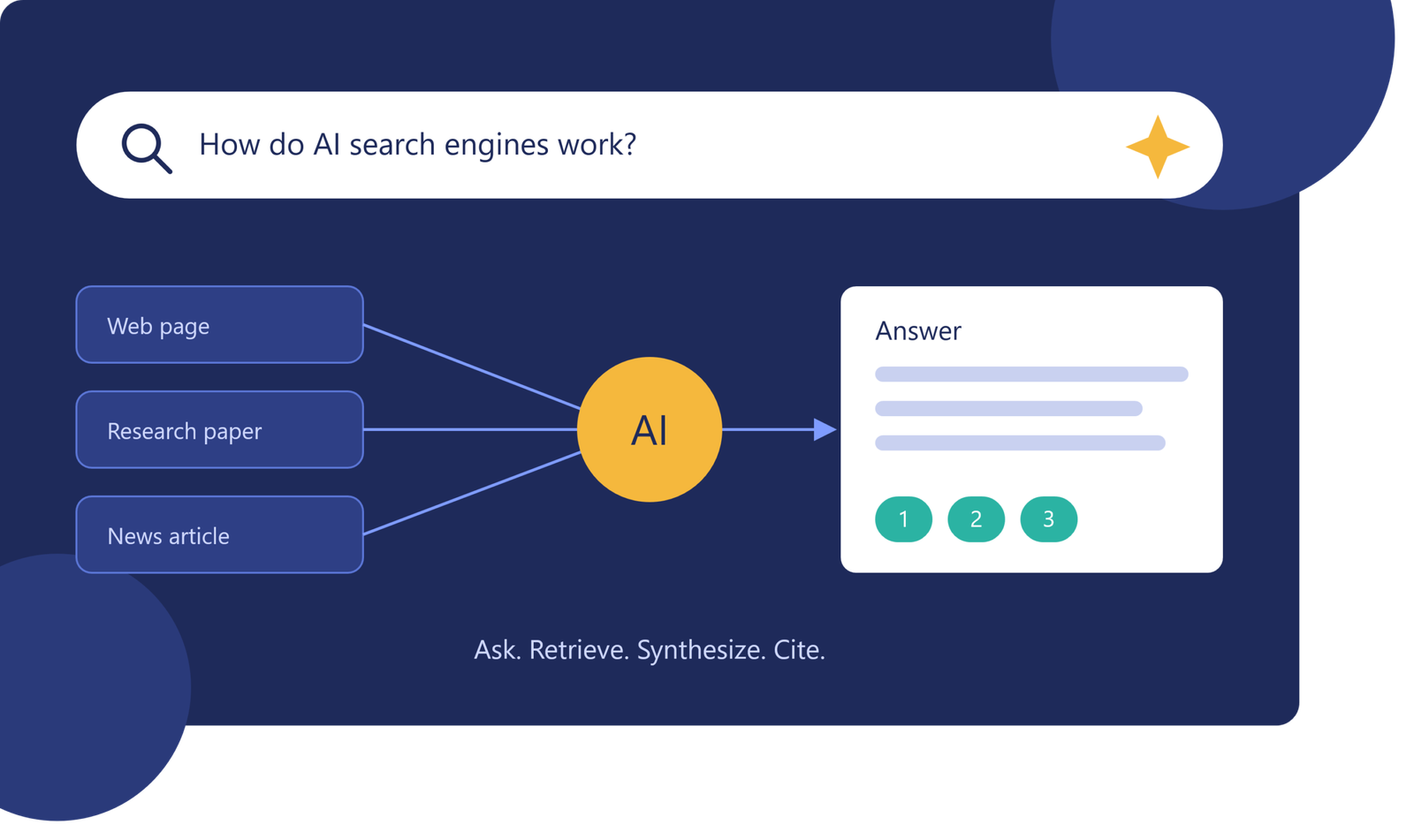
1. Understanding the question. Language models grasp meaning, not just keywords. You can ask “why does my bread come out dense?” and the system understands the intent even if no page uses those exact words.
2. Retrieving information. The system searches the web or an index of documents and pulls out the most relevant passages. This step is often called retrieval, and it keeps answers grounded in real, current sources instead of relying only on what the model learned during training.
3. Generating the answer. The language model reads the retrieved material and writes a synthesized response. This pairing is commonly known as retrieval-augmented generation (RAG).
4. Citing sources. Good AI search tools show where the information came from, so you can verify claims and read the original pages.
5. Remembering context. Because the conversation continues, each follow-up question builds on the last. This makes searching feel more like talking to a knowledgeable assistant than querying a database.
Key Benefits
- Speed: You get a synthesized answer in seconds instead of opening ten tabs.
- Natural language: You can ask complex, multi-part questions the way you would ask a person.
- Follow-up friendly: You can refine and dig deeper in the same conversation.
- Better for research: Summaries, comparisons, and overviews of a topic are much faster to produce.
- Accessibility: Plain-language answers lower the barrier for people who struggle to evaluate lots of technical pages.
Limitations and Risks
AI search is useful, but it is not magic. Keep these points in mind.
Hallucinations. Language models can state incorrect information with total confidence. Even with retrieval, a model might misread a source or blend details together.
Source quality. The answer is only as good as the pages it draws from. If the sources are outdated, biased, or low quality, the summary can inherit those flaws.
Hidden nuance. A neat summary can flatten disagreement. On contested topics, the sources may differ, and a single smooth answer can hide that.
Reduced exploration. When you only read the summary, you may miss the depth, context, and serendipity of browsing original sources.
Privacy. Conversational queries often contain more personal detail than keyword searches. It is worth knowing how a service stores and uses your data.
A good habit: treat the AI answer as a strong first draft, and click through to the cited sources for anything important, such as medical, legal, or financial decisions.
What This Means for Website Owners and Creators
If you publish content online, AI search changes how people find you.
- Fewer clicks, more citations. When users get answers directly, fewer may visit your page. Being cited as a source becomes valuable in itself.
- Clarity wins. Content that is well structured, accurate, and clearly written is easier for AI systems to understand and reference.
- Expertise and originality matter. Original research, first-hand experience, and real expertise are things a summary cannot easily replace.
- Structure helps. Clear headings, direct answers to common questions, and descriptive titles make your content easier to retrieve and cite.
The old goal of ranking on page one is expanding into a new one: being the trusted source that AI systems choose to draw from.
Tips for Using AI Search Well
- Be specific. Add context, such as your budget, goal, or experience level, to get tailored answers.
- Ask follow-ups. Refine instead of restarting.
- Check the citations. Open the sources, especially for facts that matter.
- Cross-check important answers. Compare against a second source or a traditional search.
- Use each tool for what it does best. Traditional search is great for finding a specific site or product page. AI search shines for explanations, comparisons, and research.
The Road Ahead
AI search is still evolving quickly. Expect better accuracy, stronger source attribution, and more personalization. Expect, too, a shift from tools that only answer questions to ones that act, such as comparing products, planning trips, and completing multi-step research on your behalf. Questions about fairness to publishers, transparency, and trust will keep shaping how these tools develop.
Final Thoughts
AI-powered search engines are not replacing the web. They are a new way of navigating it. They save time and make information more approachable, but they work best when paired with human judgment: curiosity, healthy skepticism, and a willingness to check the sources. Whether you are searching or publishing, understanding how these tools work will help you get the most out of the next era of the internet.