
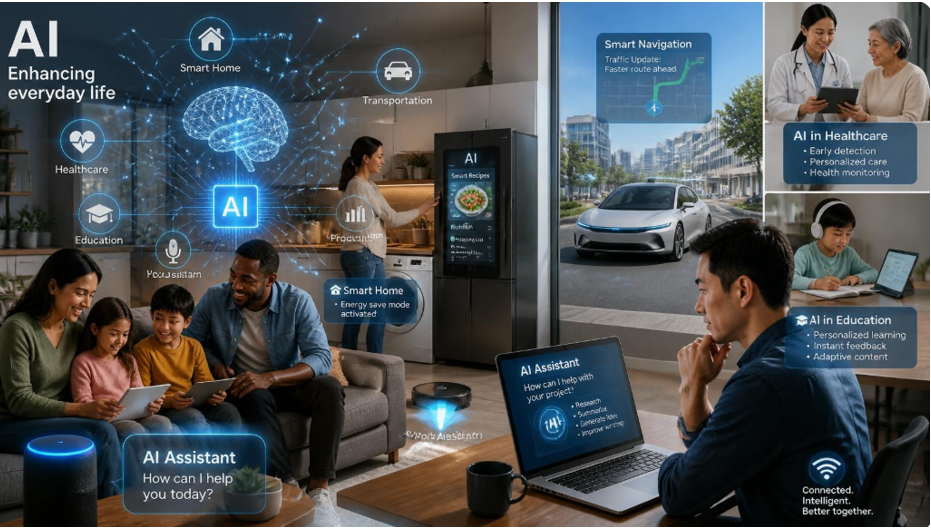
Artificial Intelligence (AI), once considered a futuristic idea seen only in science fiction, has now become an integral part of daily life. It often operates behind the scenes, influencing many routine activities. Whether searching for information online, shopping, traveling, communicating with others, or managing smart home devices, AI is transforming the way people live and interact with the world around them.
Although people may not always notice it, artificial intelligence influences decisions and helps in countless ways. Understanding its role can help us use these technologies more effectively while also thinking carefully about their benefits and challenges.
What Is Artificial Intelligence?
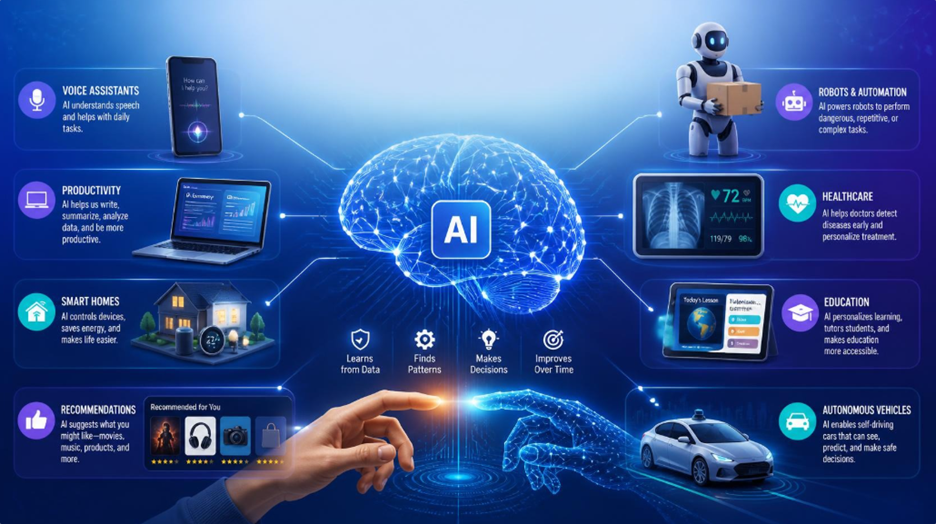
Artificial intelligence refers to computer systems that can perform tasks that usually require human intelligence. These tasks may include understanding language, recognizing images, learning from information, making predictions, and solving problems.
AI systems use large amounts of data and special algorithms to identify patterns. For example, an AI system can study a person’s previous choices and use that information to recommend a film, suggest a song, or predict what product they may want to buy.
AI in Communication

One of the most common applications of AI can be seen in modern communication. AI-powered email systems help sort messages and block unwanted spam. Messaging platforms use AI to suggest replies, provide language translation, and fix spelling errors. In addition, virtual voice assistants can recognize spoken commands, respond to questions, and perform various tasks for users.
Translation tools have made it easier for people from different countries to communicate. While these tools are not always perfect, they can help users understand basic information and participate in conversations across language barriers.
AI can also help businesses communicate with customers. Many websites use chatbots to answer common questions at any time of day. This allows customers to receive quick support, although more complex problems may still require a human representative.
AI at Home

Artificial intelligence is becoming increasingly common in homes. Smart speakers can play music, set alarms, provide weather updates, and control connected devices. Smart thermostats can teach a household’s routines and adjust the temperature automatically.
Robotic vacuum cleaners use sensors and AI-powered navigation to move around rooms, avoid obstacles, and clean floors. Security cameras can detect movement and send alerts to homeowners. These technologies can make daily tasks more convenient and may help people save time and energy.

However, smart home devices also collect data. For this reason, users should understand privacy settings and choose strong passwords to protect their information.
AI in Transportation
Transportation is another area where AI plays an important role. Navigation applications analyze traffic conditions and suggest the fastest routes. They can estimate arrival times, identify accidents, and recommend alternative roads.
Many modern vehicles include AI-supported safety features. These may include automatic emergency braking, lane-departure warnings, parking assistance, and systems that detect nearby vehicles or pedestrians.
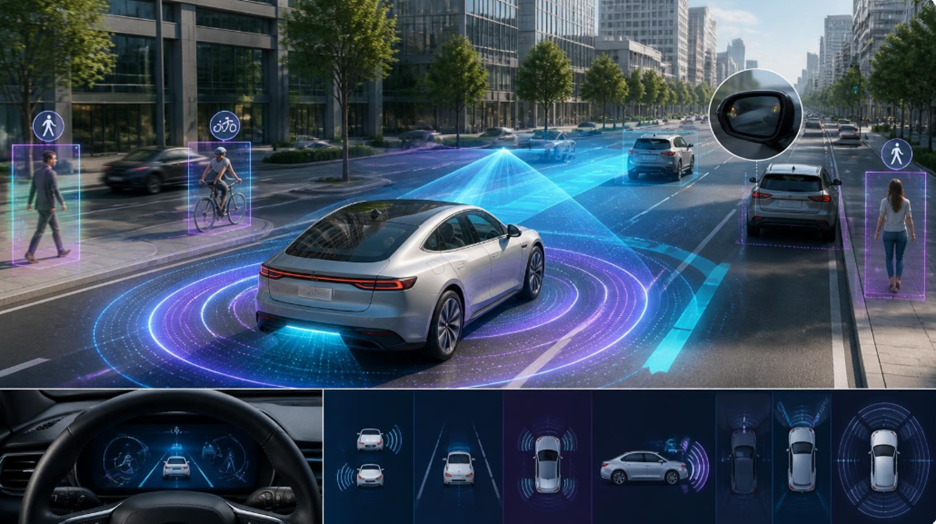
Although fully autonomous vehicles are still developing, AI is already helping make transportation safer and more efficient. In the future, intelligent transportation systems may reduce traffic congestion and improve public transport services.
AI in Shopping and Entertainment
Online shopping platforms use AI to recommend products based on browsing history, previous purchases, and similar customers’ interests. These recommendations can help shoppers discover useful products, but they can also encourage people to buy things they did not originally plan to purchase.
Streaming services use AI to recommend films, television programs, music, and podcasts. These suggestions are often convenient because they help users find content that matches their preferences. At the same time, relying too much on recommendations can limit exposure to new or different ideas.
AI is also used to create digital content, edit photographs, generate music, and personalize advertisements. As these tools become more accessible, people can produce creative work with fewer technical skills.
AI at Work and School
AI is changing workplaces by helping employees analyze data, organize schedules, write drafts, and automate repetitive tasks. In fields such as medicine, finance, education, and engineering, AI can assist professionals with research and decision-making.
Students can use AI tools to explain difficult subjects, practice languages, generate ideas, and improve writing. However, AI should support learning rather than replace it. Students still need to develop their own understanding, creativity, and critical-thinking skills.
In the workplace and in education, it is important to check AI-generated information carefully. AI systems can make mistakes, misunderstand questions, or provide outdated information. Human judgment remains essential.
Benefits of AI in Everyday Life
AI offers several important advantages:
Convenience: It can automate routine tasks and save time.
Personalization: It can provide recommendations based on individual needs.
Accessibility: Voice control, translation, and assistive technologies can help people with disabilities.
Efficiency: AI can process large amounts of information quickly.
Safety: AI-supported systems can identify risks and warn people about possible dangers.
Innovation: AI helps researchers and businesses develop new solutions.
These benefits explain why AI has become so widely used. When designed and used responsibly, it can improve productivity and make many services easier to access.
Challenges and Concerns
Despite its advantages, AI also creates important challenges. Privacy is one of the biggest concerns because many AI systems depend on personal data. Users may not always know what information is being collected or how it is being used.
Another concern is misinformation. AI can generate convincing but inaccurate text, images, and videos. This makes it increasingly important to verify information before sharing or relying on it.
Employment is also a major issue. Some jobs may change or disappear as automated systems become more capable. At the same time, new jobs may develop in areas such as AI management, software development, data analysis, and technology ethics.
Bias is another challenge. If an AI system is trained using incomplete or unfair data, it may produce biased results. Developers and organizations must test AI systems carefully and make sure they are used fairly.
How to Use AI Responsibly
People can take several steps to use AI responsibly:
Protect personal information. Avoid sharing sensitive data with unknown tools.
Check important information. Do not assume that every AI-generated answer is correct.
Use strong passwords. Secure accounts connected to smart devices and online services.
Understand privacy controls. Review how applications collect and store data.
Keep human judgment involved. AI should assist decision-making, not always make decisions independently.
Use AI ethically. Avoid using it to deceive, copy someone’s work, or spread false information.
Continue learning. Understanding how AI works makes it easier to recognize both its strengths and limitations.
The Future of AI and Everyday Life
AI will likely become even more integrated into daily life. Future applications may include more advanced health monitoring, personalized education, smarter public services, and improved tools for people with disabilities.
However, the future of AI will depend not only on technological progress but also on human choices. Governments, businesses, educators, and individuals must work together to create rules and habits that protect safety, privacy, fairness, and freedom.
AI should not be viewed as something that will simply replace people. Its greatest value may come from helping people solve problems, explore ideas, and focus on work that requires empathy, creativity, and judgment.
Conclusion
Artificial intelligence is already part of everyday life. It helps people communicate, travel, shop, learn, work, and manage their homes. Its benefits include convenience, speed, personalization, and improved access to information.
At the same time, AI brings risks involving privacy, misinformation, bias, and employment. The best approach is not to reject AI or accept it without question, but to use it thoughtfully and responsibly.
As AI continues to develop, people who understand its possibilities and limitations will be better prepared to benefit from this powerful technology while protecting the values that matter most.